EMAIL US:salesmanager@singi.com
- All
- Product Name
- Product Keyword
- Product Model
- Product Summary
- Product Description
- Multi Field Search


Views: 251 Author: Mark Zhang Publish Time: 2026-07-15 Origin: Singi Electrical
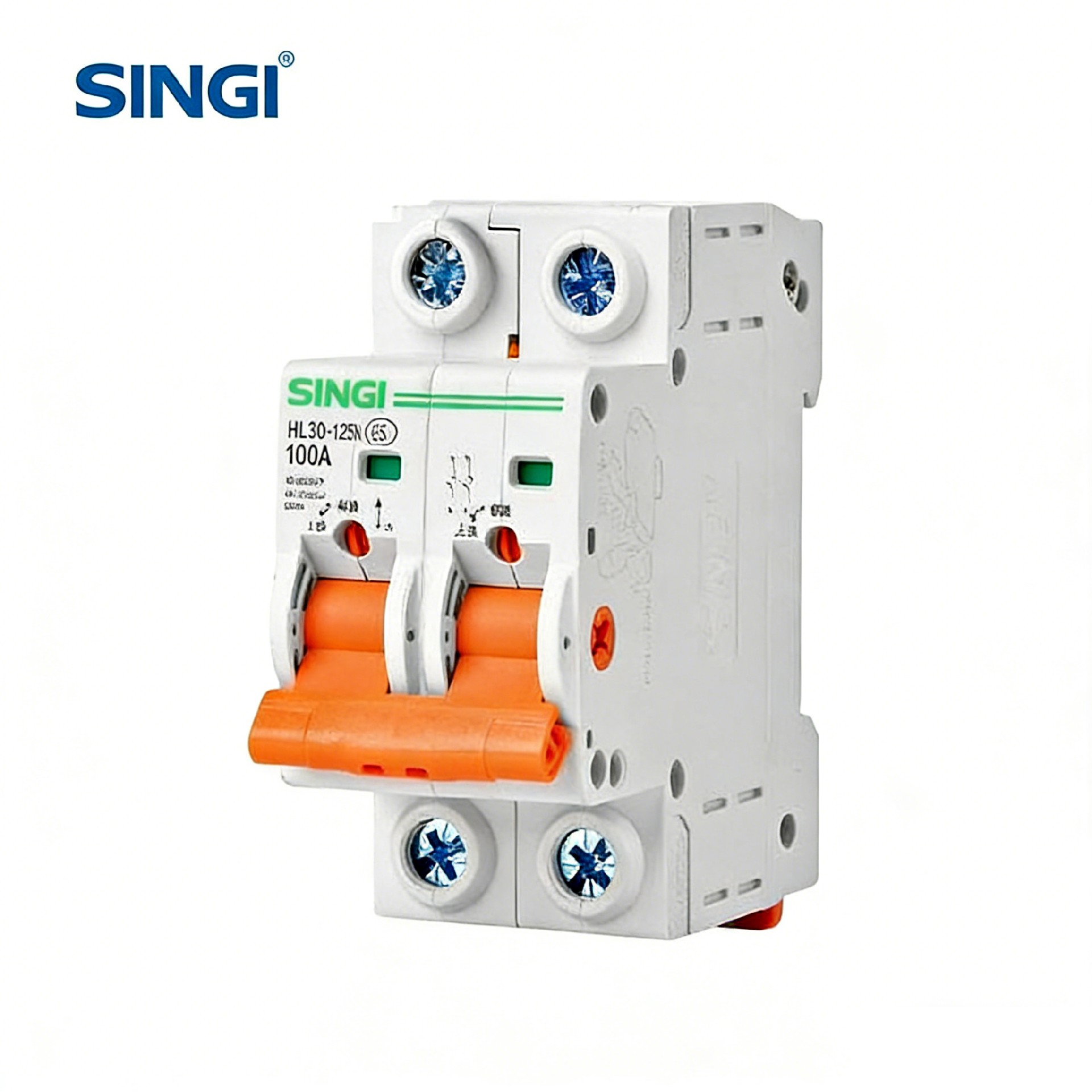
The HL30-125N isolating switch from SINGI provides reliable electrical isolation for low-volt-level distribution systems. Designed for safety and durability, it meets key industry standards for disconnection and maintenance. Learn how this switch enhances system reliability. View the full isolating switch product range.
An isolating switch (also called a disconnect switch) is a mechanical switching device that provides electrical isolation of a circuit for safe maintenance and fault prevention. Unlike circuit breakers, isolating switches are not intended to interrupt fault currents but to provide a visible break in the circuit. The HL30-125N isolating switch is a critical component in low-volt-level power distribution systems, offering reliable isolation under rated conditions.
In industrial and commercial installations, isolating switches allow technicians to work on downstream equipment without risk of electric shock. They must comply with strict safety standards to provide positive opening action and adequate creepage distances. The SINGI HL30-125N meets these demands with robust construction and clear ON/OFF indication.
The HL30-125N is designed with a double-break contact system and high-quality insulating materials, offering a visible and reliable air gap when in the OFF position. Its rated operational volt-level is up to 400V AC, and it handles a rated amperage of 125A, making it suitable for main distribution boards and sub-distribution units.
Key features include:
The switch undergoes rigorous testing for mechanical endurance (over 10,000 operations) and electrical endurance under load. Its arc chamber design minimizes internal ionisation, enhancing operator safety during manual switching.
Note: Always verify that the isolating switch is chosen according to the system's prospective short-circuit amperage and coordination with upstream protective devices.
Isolating switches must comply with international and national standards to ensure safety and interoperability. The HL30-125N is designed to meet the requirements of:
These standards cover dielectric properties, temperature rise, switching capacity, and thermal stability. Compliance ensures that the HL30-125N can be integrated into certified switchboards and used in global projects.
SINGI Electrical brings decades of experience in manufacturing low-volt-level components. The HL30-125N isolating switch offers a balance of cost-effectiveness and reliability, backed by consistent quality control procedures. For engineers and procurement professionals, choosing a SINGI switch means shorter lead times, technical support, and compatibility with a wide range of busbar systems.
Compared to alternative products, the HL30-125N provides:
| Parameter | HL30-125N | Industry Typical |
|---|---|---|
| Rated Volt-level (AC) | 400V | 400V |
| Rated Current | 125A | 100-125A |
| Number of Poles | 3P/4P | 3P/4P |
| Mechanical Endurance | >10,000 ops | 8,000 ops |
| Certification | CE, CB, CCC | Varies |
Contact SINGI for detailed technical datasheets and project-specific recommendations.
A1: An isolating switch provides a visible disconnect gap for safety during maintenance, without overamperage protection. A circuit breaker protects against overloads and short circuits but may not guarantee a visible break.
A2: The HL30-125N is designed for AC applications. For DC isolation, SINGI offers dedicated DC isolating switches. Always check the product datasheet for ratings.
A3: The switch has a clear ON/OFF marking and a visible gap in the OFF position, complying with the requirements for safe isolation per IEC 60947-1.
A4: The switch can be installed in any orientation (vertical or horizontal) but should be mounted on a DIN rail or panel with proper clearance for heat dissipation.
For reliable isolation in your next project, consider the HL30-125N isolating switch from SINGI. View the product page for specifications and ordering information.