EMAIL US:salesmanager@singi.com
- All
- Product Name
- Product Keyword
- Product Model
- Product Summary
- Product Description
- Multi Field Search


Views: 12 Author: Mark Zhang Publish Time: 2026-11-28 Origin: 本站
A mid-sized precision components manufacturer in the U.S. Midwest operates three production lines serving automotive and aerospace clients. The facility runs 24/5, with CNC machining centers, induction furnaces, and quality labs drawing a combined 2.4 MW at peak load. The company ships over 1,200 custom parts weekly, many with tolerances under 25 microns.
Grid reliability in the region has declined over the past five years. The local utility reports an average of 14 momentary outages and 3 sustained interruptions per year. For a plant where a single volt-level sag can scrap an entire furnace batch, power continuity is not an operational convenience. It is the baseline for meeting delivery commitments and maintaining ISO 9001 certification.
The plant relied on a 12-year-old automatic transfer switch paired with a 1.5 MW diesel generator. The setup had three persistent problems.
First, transfer times averaged 180 milliseconds. That window proved long enough to trip CNC controllers and drop furnace temperature by 40°C, causing scrapped work and 6 to 8 hours of recovery time per event. Production data from the prior fiscal year showed 54 hours of unplanned downtime tied to power transitions, costing $82,000 in lost output and overtime.
Second, the aging ATS showed contact welding after repeated high-amperage switching. Maintenance crews replaced contacts twice in two years at $4,500 per service call, excluding lost production time. The switch also failed a routine thermographic inspection, with one pole running 22°C hotter than the others.
Third, the system lacked remote monitoring. Operators discovered transfer failures only when equipment went dark. There was no event log to diagnose whether a trip originated from the switch, the generator, or the grid. That blindness slowed every root-cause investigation and left the maintenance team reacting instead of planning.
The engineering team assessed three replacement options: a like-for-like electromechanical ATS from a European vendor, a static transfer switch with a higher price tag, and the SINGI GNS1-C intelligent PC-class ATS. The static switch was ruled out on cost and heat dissipation. The European ATS met basic requirements but offered limited monitoring and no predictive maintenance features.
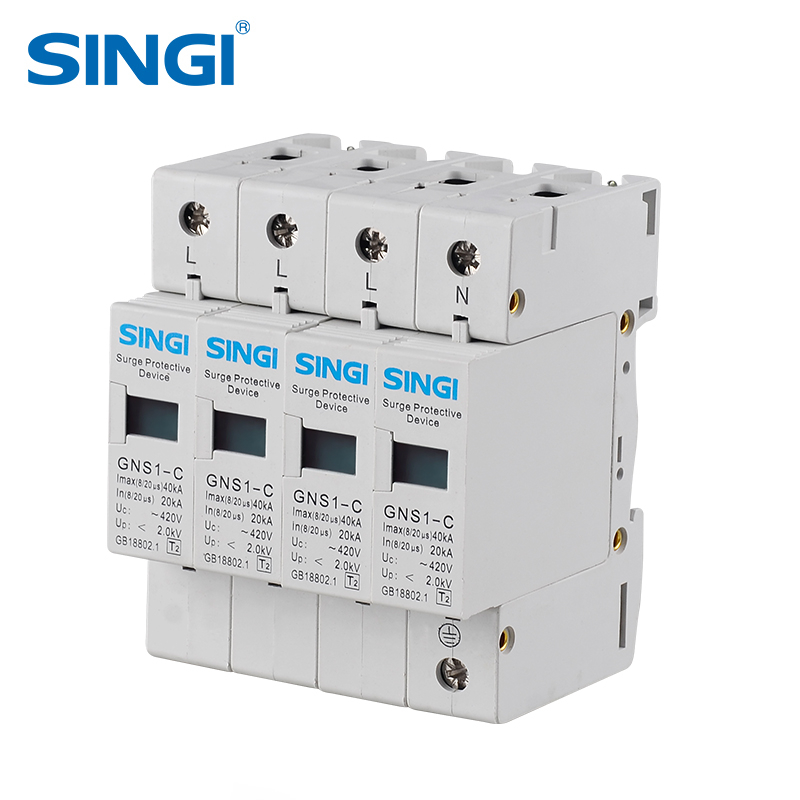
The GNS1-C stood out for three reasons. Its transfer time of under 100 milliseconds addressed the CNC dropout problem, keeping controllers within ride-through tolerance. The switch uses a PC-class controller with dual redundant logic, which reduces the risk of a single-point failure during a transfer event. And the built-in communication interface provides real-time event logging and remote status monitoring over Modbus TCP, closing the visibility gap that had frustrated maintenance for years.
Cost was also a factor. The GNS1-C landed at $11,800 per unit, roughly 30% below the European alternative, with a shorter lead time of four weeks instead of twelve. The plant ordered two units, one for the main distribution board and one for the emergency furnace circuit.
The project ran for seven weeks from purchase order to commissioning.
One difficulty surfaced during commissioning. The generator's volt-level regulator produced a slow ramp-up after start, causing the GNS1-C to hold on the source side for an extra 1.2 seconds. The team adjusted the generator's excitation settings and fine-tuned the ATS volt-level and frequency acceptance windows. After that change, transfers completed within the expected window without nuisance delays.
Twelve months of operation produced measurable improvements across three areas.
Beyond the numbers, the plant now meets its delivery windows with greater confidence. On-time shipment rose from 91% to 98.5%, and the quality team reported zero furnace-related deviations in the last two quarters.
"We stopped guessing power events. The GNS1-C tells us what happened, when, and why. That changed how we plan maintenance and how we talk to customers reliability." — Plant Engineering Manager
If the project were repeated, the engineering manager notes that the team would involve the generator vendor earlier in the design phase and specify a factory acceptance test that includes a simulated grid loss under full plant load. That step would have shortened the commissioning adjustment by several days.