EMAIL US:salesmanager@singi.com
- All
- Product Name
- Product Keyword
- Product Model
- Product Summary
- Product Description
- Multi Field Search


Views: 18 Author: Mark Zhang Publish Time: 2026-11-23 Origin: 本站
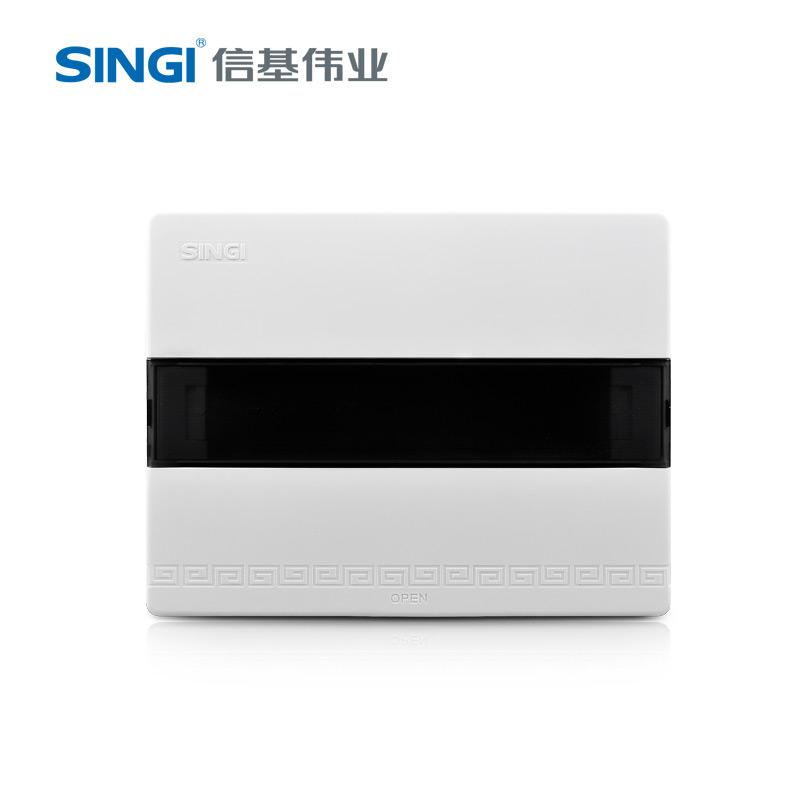
Multifamily retrofit work punishes small details. A distribution board that takes twelve minutes to verify across 1,400 apartments becomes a 280-hour problem. One regional contractor replaced opaque board doors with the SINGI GNB60 flush mounted transparent cover and rebuilt its handover sequence the change.
A mid-sized electrical contracting firm with 180 field staff and three branch offices serves multifamily housing, student accommodation, and light commercial fit-outs. Roughly 70% of annual revenue comes from renovation work in occupied buildings, where crews work floor by floor and hand over individual units to a client's facilities team as each block completes.
The company had won a framework agreement covering 1,400 apartments across four buildings built between 1978 and 1994. Original distribution boards in those units used flush-mounted enclosures with opaque plastic doors, several of which had been replaced over the decades with mismatched parts. The framework contract set a fixed price per unit and a penalty clause of $250 per day for late block handover.
Three problems appeared in the first block of 320 units.
Verification required opening every board. The client's clerk of works would not sign off a block without seeing breaker positions, RCD test labels, and the circuit schedule. With opaque doors, that meant a technician opening 320 enclosures, then closing them again. The task averaged twelve minutes per unit once walk-through scheduling was included.
Construction dust and moisture reached the breakers. Plastering, sanding, and floor sealing happened after first fix. Boards left with loose or missing doors collected dust on busbars and terminal shrouds. Six RCD nuisance trips in block one traced back to contamination, each generating a callback and a $180 average cost in labour and travel.
Doors did not survive repeated use. Hinges on the older enclosures snapped, screw threads stripped, and two units ended up with doors held shut by tape. Replacements were ordered in small batches at $22 to $35 per door plus freight, with lead times of two to three weeks.
The contractor tested self-adhesive protective film first. Film kept dust off during wet trades but had to be removed before inspection, then reapplied after any remediation. Third-party covers with metal hinges failed the same way the originals had. A proposal to leave boards open until final handover was rejected by the client's safety advisor.
A project engineer specified the GNB60 after reviewing enclosure options with the distributor. Four factors decided it.
Cost per unit came in below the $30 average the contractor had been paying for replacement doors, and the frames were ordered once per block than in emergency batches.
The rollout ran over six weeks alongside the second block.
The one real obstacle was wall depth. Plaster thickness on the 1990s blocks varied by up to 18 mm across a single corridor, and in places the frame sat proud of the finished surface. The fix was a depth survey on each floor before the render stage, followed by packing shims cut on site and a switch to a deeper collar on two floors. Installation time per unit rose from four minutes to six on those floors, still well under the twelve minutes the old verification routine consumed.
The wider effect showed up in labour planning. Two technicians who had been assigned to walk-through duty were redeployed to first-fix work, and the client's facilities team adopted the transparent-front layout as its standard for future refurbishments in the same portfolio.
"The cover changed when the work happens, not how it looks," said the contractor's project lead for the framework. "Fitting it at second fix means the board is protected while the building is still a construction site, and the client can read the schedule at handover without anyone touching a screwdriver. The depth variance on the older blocks cost a few days, but the sequence holds."
Reflecting on the first block, the project lead noted that running a 40-unit pilot before committing to the full order would have surfaced the depth issue four weeks earlier. The GNB60 flush mounted transparent cover is specified in the contractor's next framework bid, covering an estimated 900 additional units. Product details are available on the SINGI GNB60 page.