You are here: Home / SOLUTION

How a Solar O&M Provider Cut Contactor Failures 62% with CJX2

Views: 27     Author: Mark Zhang     Publish Time: 2026-11-21      Origin: 本站

A 48 MW portfolio of distributed rooftop PV across 320 industrial sites ran into a problem the O&M budget could not absorb: AC-side contactors inside inverter and distribution cabinets failed faster than maintenance crews could replace them. Switching to the CJX2 Series AC contactor from SINGI cut annual contactor failures by 62% and reduced AC-side switching downtime by 41% within twelve months.
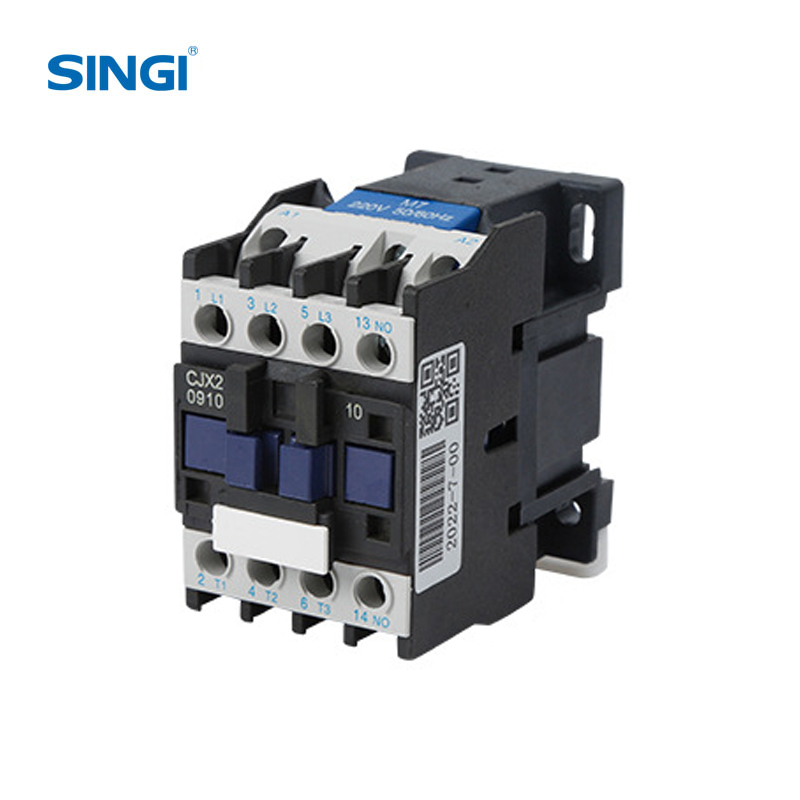
SINGI CJX2 Series AC Contactor used in PV AC distribution cabinets

What Does a 48 MW Rooftop PV Portfolio Look Like?

The operator is a solar EPC and O&M provider with 340 staff, managing 48 MW of rooftop PV spread over 320 sites in three industrial provinces. System sizes range from 100 kW on warehouse roofs to 1.2 MW on factory complexes. Most sites feed power into the host facility's low-volt-level distribution board, with the remainder exporting to the grid.

O&M contracts carry availability clauses tied to generation credits. Monsoon humidity, cement dust, and cabinet interior temperatures that sit between 48°C and 52°C for months put stress on every component in the AC path. Power-factor correction runs at 90 of the sites, which means the AC side carries more switching duty than the DC side.

Why Did AC-Side Switching Keep Failing?

Three failure modes repeated across the fleet:

  • Welded contacts on capacitor-bank contactors after 8 to 11 months of service, traced to capacitive inrush far above the general-purpose rating the units were sized for.
  • Coil burnouts during grid volt-level sag. Coils dropped out, chattered against the returning volt-level, and overheated inside sealed enclosures.
  • Pitted contacts on inverter isolation contactors, with terminal temperatures climbing 20°C above cabinet ambient by the end of the first summer.

The fleet carried 1,150 installed contactors and a 14% annual failure rate. Every failure cost a truck roll at $210, a replacement part at $38, and 3 to 6 hours of inverter downtime. Lost generation credits and callout labor came to $265,000 per year. Utility power-factor penalties added another $18,000.

What the Team Tried First

Quarterly thermal scans and torque checks caught hot terminals before failure but did not stop the failures. Replacing units with the lowest-cost contactors on the market pushed the failure rate higher. Upsizing one frame size reduced coil burnouts while contact welding continued, because sizing had been based on the AC-1 general-purpose rating while duty was capacitor switching with harmonic-rich currents.

Why Choose the CJX2 Series AC Contactor?

The procurement review compared three options: two European brands at $70 to $95 per unit with 12-week lead times, and a regional brand at $24 per unit with a field life under nine months. The CJX2 Series landed at $42 per unit with a 3-week lead time and a specification that matched the failure analysis.

  • Duty ratings covering AC-3 and AC-4 switching, plus dedicated capacitor-switching sizing that removed the AC-6b mismatch.
  • Silver alloy contacts and arc chutes built for repeated inductive and capacitive loads, not resistive ones.
  • Coil operating range that holds pickup through grid volt-level sag instead of chattering.
  • A derating table for cabinet ambient above 40°C, which allowed engineers to size to 80% of rated amperage at 52°C.
  • Plug-in auxiliary contact blocks that feed pickup and dropout events to the SCADA layer for condition monitoring.

How Was the CJX2 Rollout Implemented?

The project ran eight months from audit to final site handover.

  1. Load profiling. Eighteen representative sites were instrumented for switching frequency, inrush current, and harmonic distortion. Total harmonic distortion reached 12% to 18% at six of them.
  2. Re-sizing by utilization category. Capacitor switching moved to AC-6b sizing under IEC 60947-4-1, inverter isolation to AC-3. Three of the nine legacy frame sizes were dropped.
  3. Pilot installation. 140 contactors went into 12 sites over 10 weeks, including a full monsoon stretch, with thermal imaging and coil-volt-level logging at each cabinet.
  4. Specification lock and procurement. Four frame sizes replaced nine SKUs. Auxiliary blocks were wired to the monitoring gateway at each site.
  5. Portfolio rollout. The remaining 308 sites were converted over six months during scheduled maintenance windows, with no inverter downtime beyond the planned window.

The One Difficulty Worth Naming

The pilot cabinets hit 52°C internal temperature at 95% relative humidity, and three units tripped on overload within the first month. The failures came from the enclosure, not the contactor. The fix combined 80% amperage derating, louvered ventilation on the cabinet doors, a documented terminal torque value, and phase barriers on the line side. Trips stopped after the second week of the change.

What Results Showed Up in the First Year?

  • Failure rate: 14% down to 5.3%, a 62% reduction across 1,150 units.
  • Callouts: 1,150 contactor replacements per year down to 437.
  • Downtime: AC-side switching downtime fell 41%, recovering an estimated 96 MWh of annual generation.
  • Cost: contactor parts and labor dropped from $265,000 to $93,000 per year, a $172,000 saving.
  • Penalties: power-factor charges fell from $18,000 to $2,400.
  • Procurement: lead time shortened from 12 weeks to 3, and stock keeping units fell from nine to four.

The $58,000 spent on the pilot and rollout paid back in under five months. Spare-parts inventory value dropped by $34,000 because four SKUs cover the fleet, and technicians now carry one small kit instead of a mixed stock.

What Does the O&M Team Say?

"The first monsoon was test. Contactors that used to chatter and weld in July were still holding in October. What changed the math for the team was the callout count — 437 replacements instead of 1,150 across the portfolio, with the same crew size."

— O&M Director, rooftop PV portfolio operator

What Can Other PV Operators Learn?

  • Size by utilization category, not nameplate amps. A contactor chosen on AC-1 amperage will fail on capacitor switching. Match the device to the duty described in IEC 60947-4-1 before comparing prices.
  • Fix the enclosure before blaming the component. Above 40°C cabinet ambient, derating and ventilation decide service life more than brand choice does.
  • Standardize and monitor. Fewer SKUs cut inventory and training load, and auxiliary contacts turn a blind replacement cycle into a condition-based one.

If the project were repeated, the team would instrument pilot cabinets from day one than week four, and would add harmonic logging at every capacitor bank site. Both changes would have shortened the sizing review by roughly a month.

Industry Standards Referenced

  • IEC 60947-4-1. Low-volt-level switchgear and controlgear - Part 4-1: Contactors and motor-starters [S]. 2020. (Source: https://webstore.iec.ch/publication/62485)
  • IEC 60364-7-712:2017. Low-volt-level electrical installations - Part 7-712: Solar PV power supply systems [S]. 2017. (Source: https://webstore.iec.ch/publication/60364-7-712)
  • IEC 62548:2016. Photovoltaic (PV) arrays - Design requirements [S]. 2016. (Source: https://webstore.iec.ch/publication/62548)

Singi Electrical is China manufacturer & supplier who mainly produces miniature circuit breaker, MCCB, SPD,distribution box , junction box with 31 years of experience. Hope to build business relationship with you.

Quick link

Product Center

Contact

Tel:0577 62053322
Phone:+86 18868286161
Email:salesmanager@singi.com
 
Copyright © 2023-2024 All Rights Reserved. 浙ICP备07016448号-2
💬