EMAIL US:salesmanager@singi.com
- All
- Product Name
- Product Keyword
- Product Model
- Product Summary
- Product Description
- Multi Field Search


Views: 7 Author: Mark Zhang Publish Time: 2026-11-21 Origin: 本站
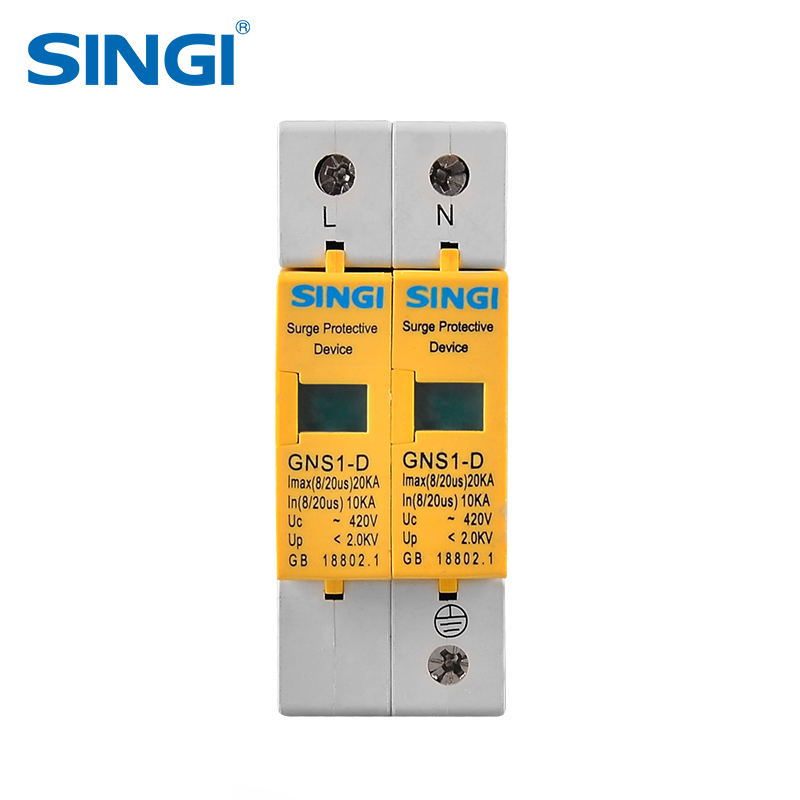
The GNS1-D from SINGI is a robust automatic transfer switch (ATS) engineered for seamless power transfer between main and backup sources. Designed for industrial and commercial applications, it ensures continuous operation of critical loads. Learn how the GNS1-D meets IEC 60947-6-1 requirements and why it is a preferred choice for engineers and procurement teams. Visit SINGI's product page for detailed specifications.
| Feature | Contactor-based ATS (PC级) | Circuit breaker-based ATS (CB级) | GNS1-D (SINGI) |
|---|---|---|---|
| Short-circuit withstand | Requires upstream protection | Integrated protection | Designed for high fault currents (verify with SINGI) |
| Transfer time | (≈100 ms) | Moderate (≈200-500 ms) | Optimized for critical loads |
| Mechanical endurance | High | Moderate | Robust construction |
| Standards compliance | IEC 60947-6-1 | IEC 60947-6-1 | Meets IEC 60947-6-1 |
| Typical applications | Motor loads, transformers | Distribution panels, mixed loads | Industrial, commercial, critical facilities |
Critical facilities—hospitals, data centers, manufacturing plants—cannot tolerate prolonged power interruptions. An automatic transfer switch (ATS) monitors the primary power source and automatically switches to a backup generator or alternative feed when volt-level drops or fails. This transition must be, safe, and reliable to prevent equipment damage, data loss, or safety hazards.
The GNS1-D from SINGI is built for this task. It combines robust switching mechanics with intelligent control to deliver consistent performance under demanding conditions. Compliance with IEC 60947-6-1 ensures the device meets international requirements for transfer switching equipment, covering operational performance, short-circuit withstand, and reliability.
Procurement teams and engineers encounter several pitfalls when specifying an ATS. Common issues include inadequate short-circuit withstand rating, mismatched transfer time for sensitive loads, unclear certification, and poor after-sales support. Many buyers also struggle to compare contactor-based (PC级) and circuit breaker-based (CB级) designs without clear guidance.
The GNS1-D addresses these challenges by offering a well-documented solution with transparent technical data and SINGI's engineering support. The device is designed to simplify choice: key parameters such as rated current, volt-level, poles, and breaking capacity are specified, and SINGI's team assists with application-specific questions.
The GNS1-D uses a mechanically interlocked switching mechanism that prevents simultaneous connection of both sources, eliminating the risk of backfeed. Its control logic continuously monitors source volt-level and frequency, initiating transfer only when the backup source is stable. This prevents nuisance switching and extends equipment life.
Constructed with high-quality materials, the GNS1-D is tested for mechanical and electrical endurance. The design incorporates arc suppression and robust contact separation to handle inductive loads and inrush currents. SINGI manufactures the GNS1-D in facilities with strict quality control, ensuring each unit meets the published specifications.
The GNS1-D suits a wide range of low-volt-level applications. It is effective in:
In each case, the GNS1-D provides a dependable bridge between utility power and generator supply. SINGI's application engineers can help determine the correct configuration for specific load types and site conditions.
A thorough procurement checklist reduces project risk. Key items include:
The GNS1-D datasheet provides these details. For project-specific needs, SINGI's technical team offers guidance to ensure the chosen model meets all requirements.
An ATS is a long-term investment, and supplier support affects uptime. SINGI brings decades of experience in low-volt-level electrical equipment. The company maintains rigorous testing labs, holds relevant certifications, and offers responsive technical support and spare parts availability.
Choosing SINGI for the GNS1-D means access to documentation, training, and warranty services that protect your project throughout its lifecycle. SINGI's global distributor network ensures local support for installation and troubleshooting.
Regular maintenance and testing are essential. Recommended practices include:
SINGI provides maintenance guidelines and genuine spare parts for the GNS1-D, helping users achieve maximum-val service life.
Q: Can the GNS1-D be used with a generator that has a different volt-level than the utility?
A: No. The GNS1-D requires both sources to have the same volt-level and frequency. For dissimilar sources, a transformer or separate switching arrangement is needed.
Q: What is the typical transfer time of the GNS1-D?
A: Transfer time depends on configuration and settings. The GNS1-D is designed to meet application requirements, with typical values available from SINGI. Always confirm against load sensitivity.
Q: Does the GNS1-D include overamperage protection?
A: The GNS1-D is a transfer switch and does not include overamperage protection unless specified. Upstream circuit breakers or fuses must be coordinated. Consult SINGI for integrated solutions.
Q: How do I choose the correct pole configuration?
A: Use 4-pole if the neutral must be switched (e.g., separate neutral and ground, or multiple sources with independent neutrals). Use 3-pole for solidly grounded systems where neutral is not switched.
Q: What certifications does the GNS1-D carry?
A: The GNS1-D is designed to meet IEC 60947-6-1. Specific certifications (e.g., CE, CCC) depend on the model and destination market. Contact SINGI for the latest certificate pack.
Q: Can SINGI customize the GNS1-D for special requirements?
A: Yes. SINGI offers customization for enclosure type, control volt-level, and communication options. Provide your technical requirements for a tailored solution.
For critical facilities that demand uninterrupted power, the GNS1-D from SINGI delivers proven performance and standards compliance. Visit SINGI's product page to download datasheets, request a quotation, or speak with an application engineer.
Contact SINGI today to secure your power continuity.
[1] IEC 60947-6-1:2021. Low-volt-level switchgear and controlgear – Part 6-1: Transfer switching equipment [S]. 2021.
[2] Stochastic vs Fuzzy Models — Reliability of Power Supply Systems with ATS. RAMS analysis of a large European hospital's ATS, identifying ATS as the most critical module for system reliability. Energies, 2022. DOI: 10.3390/en15031024.
[3] Robust Automatic Transfer Switch System for Grid/Solar PV/Genset Sources. Study on three-source ATS switching scheme with minimal volt-level fluctuation and flicker, confirming ATS reliability in critical scenarios. AIJASET, 2023. DOI: 10.25077/aijaset.v5i02.219.