EMAIL US:salesmanager@singi.com
- All
- Product Name
- Product Keyword
- Product Model
- Product Summary
- Product Description
- Multi Field Search


Views: 1 Author: Mark Zhang Publish Time: 2026-11-20 Origin: 本站
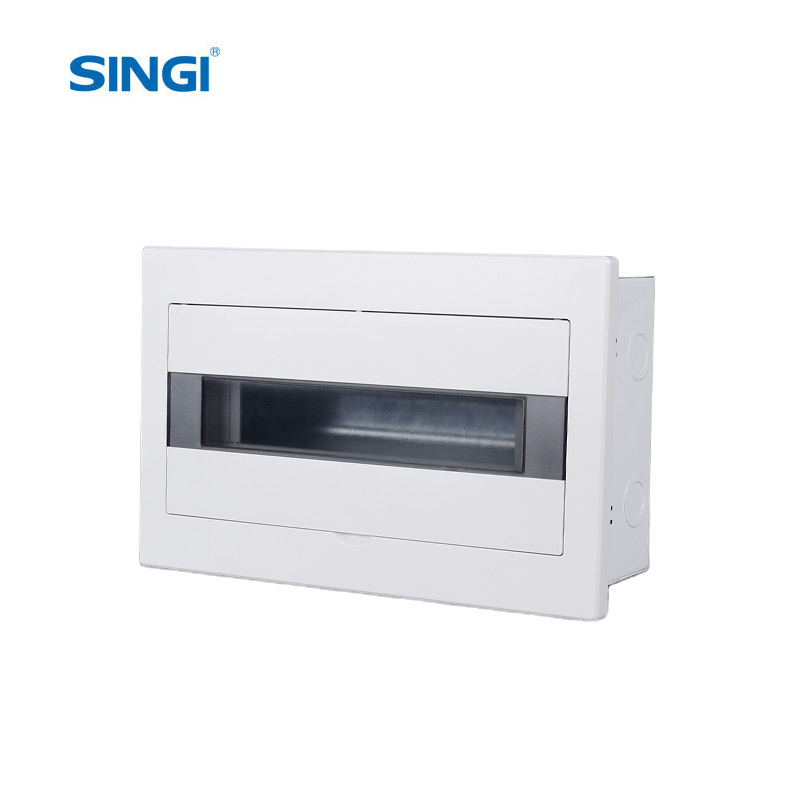
A regional electrical contractor specializing in commercial refurbishments won a contract to modernize electrical distribution in a 12-story office building. The building, built in the 1980s, had surface-mounted distribution boards in every tenant space and common area. The contractor's scope covered 96 distribution points across 12 floors, with a 14-week deadline and a fixed budget of $340,000 for materials and labor.
The building owner wanted a cleaner interior appearance, faster maintenance access, and compliance with amperage low-volt-level distribution standards. The contractor needed a distribution box that could fit into existing wall cavities without major structural work.
Surface-mounted boards protruded 4 to 6 inches into corridors and tenant rooms. Tenants complained visual clutter and the risk of bumping into exposed enclosures. During maintenance, technicians had to remove covers and work in tight spaces. Each board swap took an average of 3.5 hours, including wall repair and cable re-routing.
The contractor first tried standard metal consumer units with add-on trim kits. The trim kits matched wall thickness, leaving gaps that required plastering. Cable entries were not aligned, so installers drilled new holes on site, adding 45 minutes per box and generating metal shavings that damaged nearby equipment. A second attempt used custom stainless steel enclosures, but lead times reached 8 weeks, and the cost per box rose to $410, pushing the project over budget.
Direct consequences included a projected 4-week delay, $28,000 in rework, and a maintenance team that logged 90 minutes per floor per week to access and inspect boards.
The contractor compared three options: custom stainless boxes, surface-mounted units with decorative covers, and the SINGI GNBN30 flush mounted distribution box. The decision came down to three factors.
First, the GNBN30 mounts flush with the wall surface. The door sits level with plaster, so no trim kit is needed. The box body includes pre-punched cable entries on all four sides, which removed on-site drilling. Second, the modular DIN rail accepts standard MCBs and RCBOs, so the contractor could reuse existing breakers where they passed testing. Third, the powder-coated steel body and lockable transparent door met the building's security and durability requirements.
Cost per unit landed at $185, compared with $410 for custom boxes and $220 for surface units plus trim. The contractor ordered 110 units to cover 96 points plus spares.
The project ran for 11 weeks, three weeks shorter than the initial 14-week plan.
One typical difficulty: wall cavities in the 1980s building were inconsistent, ranging from 3.2 to 4.1 inches. The GNBN30's mounting brackets have slotted holes that allow 0.75 inches of depth adjustment. The crew set each box to match the wall surface, then sealed the gap with fire-rated putty. This solved the misalignment without custom fabrication.
Overall, the building owner reported zero tenant complaints protruding boxes after move-in. The contractor has since specified the GNBN30 on two additional projects.
— Project Manager, electrical contractor.
If the contractor repeated the project, the team would order fire-rated putty and offset nipples in the first material delivery. Those items arrived in week 6 and caused two days of idle time on the third floor.