EMAIL US:salesmanager@singi.com
- All
- Product Name
- Product Keyword
- Product Model
- Product Summary
- Product Description
- Multi Field Search


Views: 5 Author: Mark Zhang Publish Time: 2026-09-24 Origin: 本站
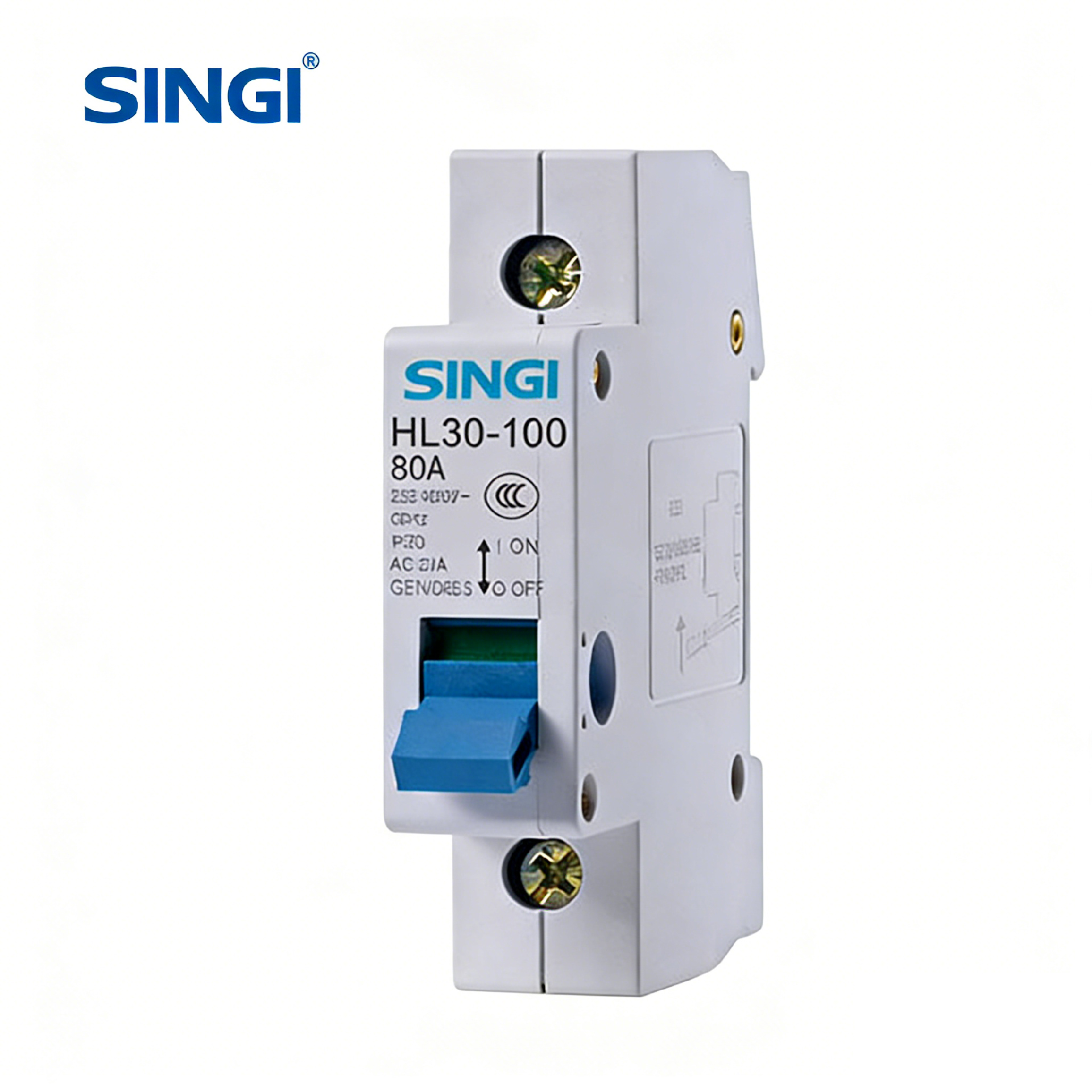
A mid-size frozen food processor replaced remote breaker-based lockout with local, padlockable isolation on every production line. The result was shorter maintenance windows, fewer isolation errors, and a payback period under three months. The switch at the center of the project was the SINGI HL30-100 isolating switch.
The plant is a frozen food manufacturer in the Upper Midwest of the United States, running three production lines that turn out par-baked dough products and frozen entrees for regional grocery chains. Annual revenue sits near $48 million, and the site employs 220 people across two shifts.Retail customers had pushed for shorter lead times and tighter order windows, which left little room for unscheduled line stoppages. At the same time, the site's electrical infrastructure dated back to the late 1990s. Motor control centers sat in a dedicated electrical room, while the machines they fed were 60 to 90 feet away on the production floor.
Every maintenance task on a mixer, filler, or conveyor required an electrician to walk to the motor control center, locate the correct feeder breaker, open it, then return to the machine and verify absence of volt-level with a handheld tester. The sequence had three weak points.
Those weak points carried direct costs. In 2022 a technician began work on a conveyor after isolating the wrong feeder. No one was injured, but the near miss triggered an internal investigation and a third-party electrical safety audit. Average lockout time ran 22 minutes per intervention, and unplanned downtime averaged 14.5 hours per month. At an estimated $1,450 per hour of lost line time, that downtime cost roughly $21,000 per month.
The plant had already tried two fixes. Maintenance crews added padlock hasps to the motor control center breakers and issued volt-level testers to every electrician. Neither addressed the core problem: isolation still happened far from the point of work, and verification remained a manual, sequential step. A procedure rewrite alone changed documentation without changing hardware.
The engineering team shortlisted three approaches: molded case circuit breakers fitted with external operating handles, rotary disconnect switches from two European manufacturers, and the SINGI HL30-100 isolating switch. Five criteria drove the decision.
The HL30-100 met the electrical requirements with a 100 A rating and AC-23A utilization category for motor load switching. Its handle accepts multiple padlocks in the open position, and the contact position is visible through the housing. Delivered hardware costs came in roughly 38 percent below the European rotary switches, with a four-week lead time instead of eleven. Enclosed versions with IP65 protection suited the washdown zones near the fillers.
The project ran seven weeks from survey to sign-off, with work scheduled production hours.
The typical difficulty appeared on Line 1, where existing enclosures had 25 mm of spare depth and short cable slack at the terminals. The team fabricated a shallow mounting bracket and used terminal extensions on the load side, which added roughly 40 minutes per enclosure but avoided a full panel rebuild that would have cost an estimated $9,000 in parts and labor.
Eleven months of operating data after the rollout produced the following changes:
Project cost totaled $31,800 in hardware, brackets, and internal labor, which put simple payback at roughly 2.4 months. Preventive maintenance labor fell by 126 hours per year, worth another $8,900 at the loaded technician rate. The site also passed its follow-up electrical safety audit with no findings on isolation procedures.
"The fastest part of a repair used to be the repair itself," said the plant maintenance manager. "Now the electrician isolates at the machine, applies a padlock, verifies once, and starts work. Our crews stopped trusting a breaker handle and started trusting a visible gap."
On reflection, the engineering lead noted that ordering spare handles and shaft extensions up front would have avoided a two-week gap during the rollout, and that specifying enclosure depth tolerance in the original survey would have removed the fabrication step entirely.
Specifications, enclosure options, and amperage lead times for the HL30-100 isolating switch are available on the SINGI product page.