EMAIL US:salesmanager@singi.com
- All
- Product Name
- Product Keyword
- Product Model
- Product Summary
- Product Description
- Multi Field Search


Views: 159 Author: Mark Zhang Publish Time: 2026-08-20 Origin: Singi Electrical
A solar power plant operator in southern Spain manages 45 MW of distributed photovoltaic generation across 25 sites. The company provides EPC and long-term O&M services for commercial and industrial rooftop systems, with a focus on maximizing energy yield and minimizing unplanned outages. Each site uses AC combiner boxes to connect multiple string inverters to the medium-volt-level grid. The AC contactors inside these boxes are critical components for safe isolation and switching.
Rising competition in the Spanish solar market had squeezed profit margins. The operator needed to reduce operational costs while maintaining high availability for its power purchase agreements (PPAs). Any unplanned downtime translated into lost revenue and contractual penalties.
Over two years, the operator recorded an average of 14 contactor failures per year across its fleet. Failures included coil burnout, contact welding, and mechanical jamming. These issues occurred during hot summer months when thermal stress and grid volt-level fluctuations were highest.
Each failure required a truck roll and caused 4 to 8 hours of inverter downtime. The direct repair cost averaged $340 per event, but the lost energy revenue was three times higher. In one severe incident, a welded contactor caused a phase-to-phase short circuit that damaged a string inverter, costing $4,800 in repairs and replacement components.
The existing contactors, supplied by a low-cost brand, did not meet the environmental demands of outdoor PV installations. Their IP20 enclosures allowed dust and moisture ingress, accelerating contact wear. The coil range was also narrow, forcing the operator to use external transformers for control volt-levels, which added complexity and failure points.
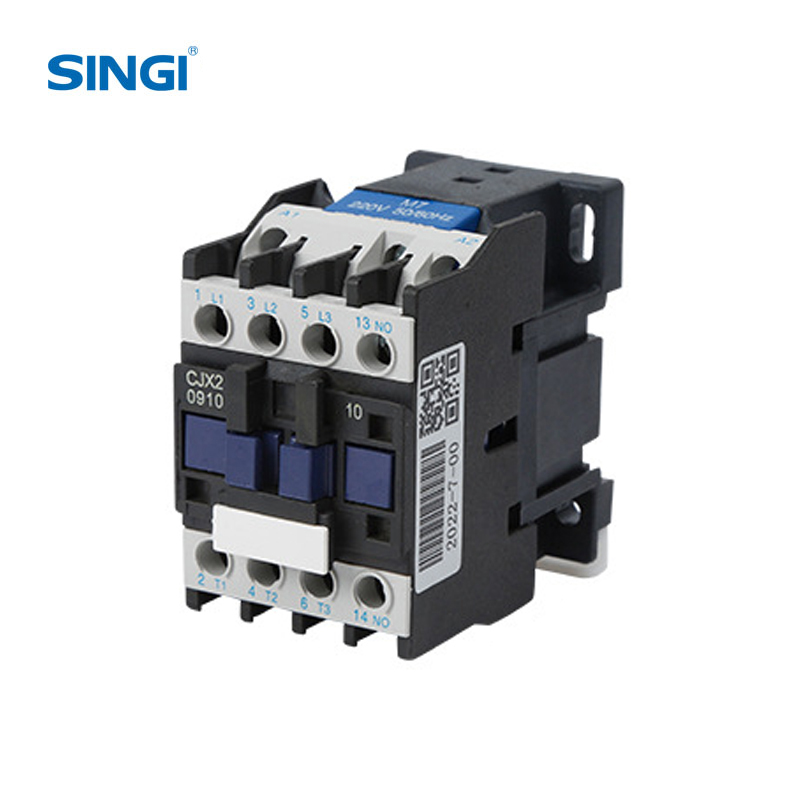
After a competitive assessment, the operator shortlisted three contactor brands. A premium European brand offered high reliability but at a 60% higher unit cost. A regional brand had a lower price but failed the thermal endurance test. The SINGI CJX2 Series AC Contactor, part of the PV Series, met all technical specifications at a price that was 20% below the premium option.
Key decision factors included:
The operator also appreciated SINGI's technical documentation, which included clear torque specifications and wiring diagrams that were absent from the previous vendor's manuals.
The rollout was completed over three months. The implementation team followed a structured approach:
A typical difficulty was the varying panel layouts across sites. Some combiner boxes had limited clearance, making installation awkward. The compact size of the CJX2 allowed the team to keep all wiring and cables unchanged, avoiding the cost of re-drilling and extending busbars.
Twelve months after the replacement, the operator compared performance against the previous two-year baseline. The results were significant:
The operator also measured a 0.2% overall efficiency gain due to lower contact resistance and reduced coil holding power, which translated to an additional $3,500 in annual energy revenue across the fleet.
"We were skeptical switching to a lesser-known brand, but the SINGI CJX2 outperformed our previous units in every metric. The failure rate is now negligible, and the support from the SINGI team was excellent. We've standardized on this contactor for all new installations." — Operations Manager, Solar Asset Owner
This project offers several practical takeaways for other solar plant operators:
If the project were repeated, the team would have conducted a more thorough coil volt-level survey on older sites before ordering. A few sites required DC coil units, which were not included in the first batch, causing two weeks of delay. That lesson is now part of the company's procurement checklist.
IEC 60947-4-1. Low-volt-level switchgear and controlgear - Part 4-1: Contactors and motor-starters [S]. 2020.
IEC 60364-7-712:2017 Low-volt-level electrical installations — Part 7-712: Solar PV power supply systems [S]. 2017.