EMAIL US:salesmanager@singi.com
- All
- Product Name
- Product Keyword
- Product Model
- Product Summary
- Product Description
- Multi Field Search

Views: 272 Author: Mark Zhang Publish Time: 2026-07-11 Origin: Singi Electrical
Photovoltaic (PV) systems demand reliable cabling to transmit DC power from solar panels to inverters. Single-core and double-core PV cables are the primary options for module interconnection and array wiring. Choosing the wrong type can lead to energy losses, fire risks, and premature system degradation. This article examines the differences between single-core and double-core PV cables, their applications, and how SINGI's products meet international standards.
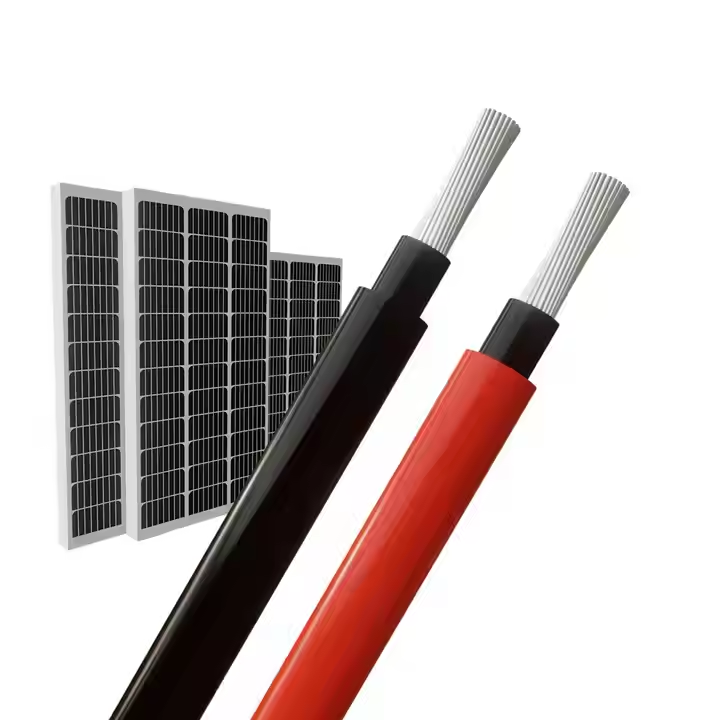
Single-core PV cables consist of one insulated conductor, used for positive or negative DC wiring. They require two separate cables to complete a circuit. Double-core PV cables contain two insulated conductors within a single outer sheath, simplifying installation and reducing material usage. SINGI's PV series includes both configurations, manufactured with tinned copper conductors, cross-linked polyethylene (XLPE) insulation, and UV-resistant sheaths.
| Feature | Single-core PV Cable | Double-core PV Cable |
|---|---|---|
| Conductor count | 1 | 2 |
| Outer diameter | Smaller per cable | Larger but single run |
| Installation complexity | Requires two runs | One run for both polarities |
| Flexibility | More flexible individually | Less flexible due to dual cores |
| Typical application | Module leads, combiner box connections | String wiring, array trunk lines |
| Cost per circuit | Higher due to two cables | Lower material and labor |
Single-core cables are preferred for short, flexible connections where space is tight—for example, between solar panels and junction boxes. They also simplify troubleshooting because each polarity can be isolated. Double-core cables excel in long runs, such as from panel arrays to inverters, as they reduce installation time and protect both conductors under a single sheath. For large-scale solar farms, double-core cables minimize labor costs and improve mechanical protection.
Always verify the cable's rated volt-level ( DC 1.5 kV) and temperature range (90°C to 120°C) to match system requirements. SINGI's PV cables are tested for 25-year lifespan under outdoor exposure.
SINGI's single-core and double-core PV cables comply with EN 50618:2014 and IEC 62930:2017, which define requirements for DC cables in photovoltaic systems. These standards specify UV resistance, ozone resistance, halogen-free flame retardancy, and mechanical robustness. Key parameters include:
These properties ensure the cables withstand harsh outdoor conditions, resist UV degradation, and prevent fire propagation. Using non-certified cables can void warranties and lead to safety hazards.
When installing PV cables, consider cable sizing to minimize volt-level drop (target<3% for DC circuits). Use appropriate connectors (e.g., MC4) and ensure proper strain relief. For double-core cables, avoid sharp bends that may stress the internal cores. SINGI's cables feature color-coded insulation (red for positive, black for negative) to prevent polarity errors. Always follow local electrical codes and manufacturer guidelines.
No. PV cables are designed for DC circuits. For AC wiring, use cables rated for AC volt-level (e.g., EN 50525 series).
SINGI PV cables are designed for a service life of at least 25 years under normal outdoor conditions, in line with module warranty periods.
Double-core cables cost slightly more per meter but reduce total installation cost because only one cable run is needed, saving labor and accessories.
In many jurisdictions, PV cables rated for outdoor use can be installed exposed (e.g., on roof racks) without conduit. Always check local requirements.
Choosing between single-core and double-core PV cables depends on installation layout, labor budget, and performance requirements. Both types from SINGI meet the strictest international standards, ensuring long-term reliability and safety. By understanding the trade-offs, solar installers and system designers can optimize their PV systems for maximum-val energy yield and minimal risk.
Learn more SINGI's PV cable range and request a quote at www.singi.com/pvcable.html.
References: