EMAIL US:salesmanager@singi.com
- All
- Product Name
- Product Keyword
- Product Model
- Product Summary
- Product Description
- Multi Field Search


Views: 250 Author: Mark Zhang Publish Time: 2026-06-16 Origin: 本站
| Parameter | GNS1-C | Traditional Solution |
|---|---|---|
| Rated Voltage | Customizable | Standard |
| Protection Level | High | Medium |
| Installation | Easy | Complex |
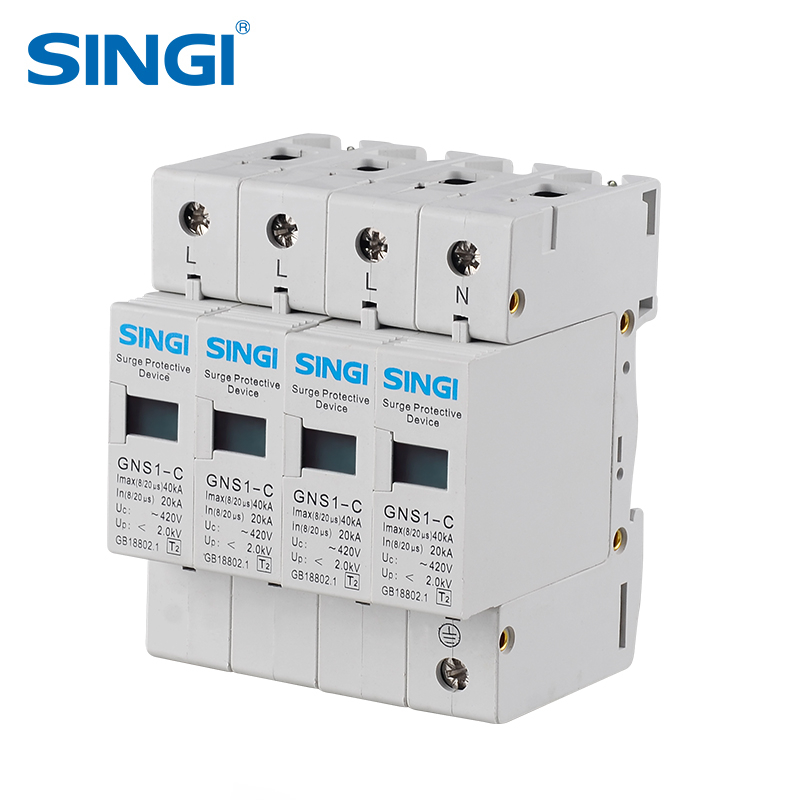
This guide explores the reliability factors of automatic transfer switches (ATS) for industrial and commercial power applications. Based on SINGI Electric's ATS product range, it helps engineers and procurement professionals choose switches that meet IEC 60947-6-1 standards. The SINGI Electric GNS1-C series offers compact design and transfer for critical loads.
Note: Proper choice and installation of GNS1-C is critical for system safety and performance. Always refer to the manufacturer specifications and relevant industry standards.
An automatic transfer switch (ATS) is a device that automatically switches a load between two power sources— a primary utility supply and a backup generator or alternate feeder. Its core function is to ensure uninterrupted power to critical equipment when the primary source fails. In low-voltage distribution systems, ATS units must comply with IEC 60947-6-1 to guarantee safe and reliable operation under fault conditions. For facility managers and electrical engineers, choosing a robust ATS is not a matter of code compliance; it affects uptime and safety. The SINGI Electric GNS1-C series ATS is designed to meet these stringent requirements, offering a compact footprint and robust switching mechanism suitable for demanding environments.
Transfer time—the interval between loss of primary power and restoration via the secondary source—can determine whether sensitive loads experience disruption. For example, programmable logic controllers (PLCs), computer servers, and medical imaging equipment may reset or malfunction if power is interrupted for more than a few cycles. Research on hospital power supply reliability identified the ATS as the most failure-prone component in the system, emphasizing that reducing transfer time and improving mechanical robustness enhance overall reliability. Standards such as IEC 60947-6-1 specify performance categories for transfer times, but real-world applications require faster switching than the minimum requirement. The SINGI Electric GNS1-C series addresses this by integrating high-speed controllers and arc-quenching technology to achieve transfer within<100 ms under most conditions, minimizing voltage dips and load disruption.
The GNS1-C automatic transfer switch from SINGI Electric combines a motor-driven mechanism with mechanical interlocks to prevent unintended parallel operation. Its controller continuously monitors both sources and initiates transfer only when the primary source falls outside acceptable voltage and frequency windows. The switch uses a magnetic arc-extinguishing system that quenches arcs during transfer, extending contact life and reducing maintenance. In addition, the GNS1-C series features a manual override for testing and emergency operation. For applications requiring enhanced coordination, the controller can be configured for open or closed transition (soft load transfer) to avoid transient disturbances. These design choices make the GNS1-C a reliable choice for facilities that demand 24/7 availability.
Industries with continuous processes—such as data centers, hospitals, semiconductor fabrication, and water treatment plants—require ATS units that can switch within a fraction of a second. In hybrid energy systems combining grid, solar photovoltaic, and generator sources, the ATS must handle rapid sequence transfers without introducing harmonics or voltage sags. A study on Grid/Solar PV/Genset sources validated that a properly designed ATS can keep voltage fluctuations below 2% during switching. The SINGI Electric GNS1-C series is well-suited for these scenarios, offering configurable input voltage ranges and support for both 50 Hz and 60 Hz systems. Its compact design also simplifies retrofitting into existing switchboards.
Q: What is the rated operational voltage of the GNS1-C?
A: The GNS1-C series covers typical low-voltage ratings up to 690 V AC, meeting IEC 60947-6-1 requirements.
Q: Does the GNS1-C support remote monitoring?
A: Yes, the controller provides dry contacts and optional communication modules (Modbus, RS485) for integration with building management systems.
Q: Can the GNS1-C be used for generator to grid transfer?
A: Yes, it is designed for transfer between any two sources, including utility, generator, and inverter-based systems.
For engineers and procurement professionals seeking a reliable automatic transfer switch, the SINGI Electric GNS1-C series combines switching, robust construction, and compliance with international standards. Explore the full specifications and request a quote on the SINGI Electric ATS product page.
[1] IEC 60947-6-1:2021. Low-voltage switchgear and controlgear - Part 6-1: Transfer switching equipment.
[2] Stochastic vs Fuzzy Models — Reliability of Power Supply Systems with ATS, Energies 2022, 15(3), 1024.
[3] Robust Automatic Transfer Switch System for Grid/Solar PV/Genset Sources, AIJASET 2022, 5(02), 219.